
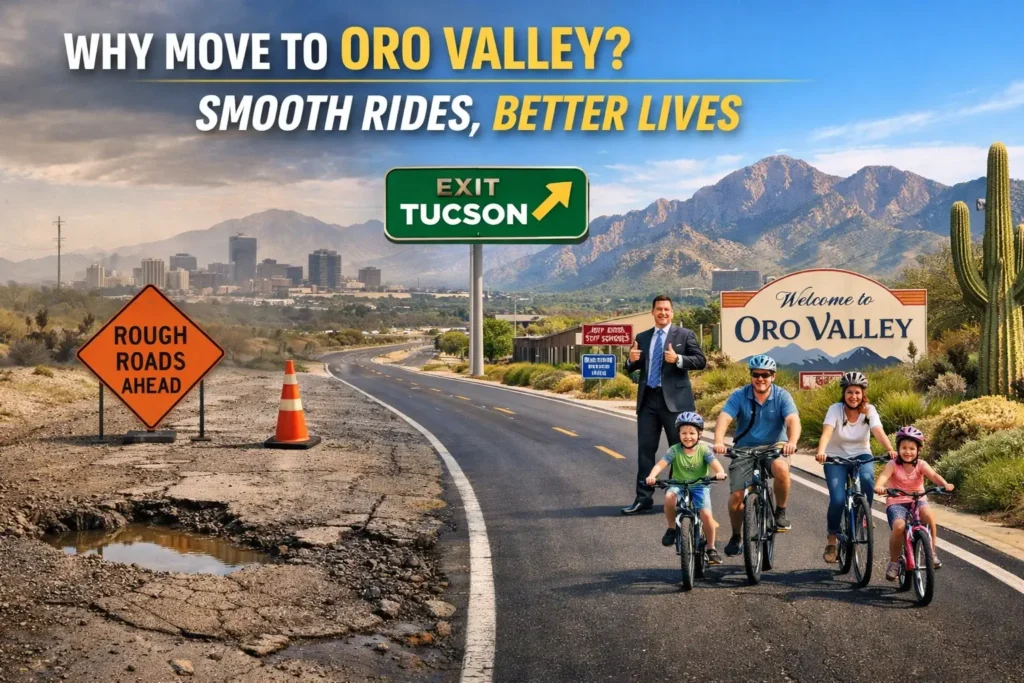
Tucson has a love language, and it’s asphalt-related.
If you’ve lived in Southern Arizona long enough, you know the routine. You’re driving along, minding your business, maybe even feeling a little optimistic, and then—BAM—your car drops into a crater that appears to have been excavated by archaeologists searching for an ancient civilization. You immediately do the Tucson Two-Step: swerve, brake, apologize to your suspension, and quietly promise your tires you’ll do better.
And if you read the recent Arizona Daily Star opinion piece about Tucson’s roads, you already know the bigger idea: the potholes aren’t just potholes. They’re a sign of deeper challenges in how a city grows, maintains, and prioritizes the basics.
But here’s the part that matters for Oro Valley: while Tucson debates big philosophy, Oro Valley is out here doing something extremely radical.
Functioning.
Tale of Two Drives: Oro Valley vs Tucson
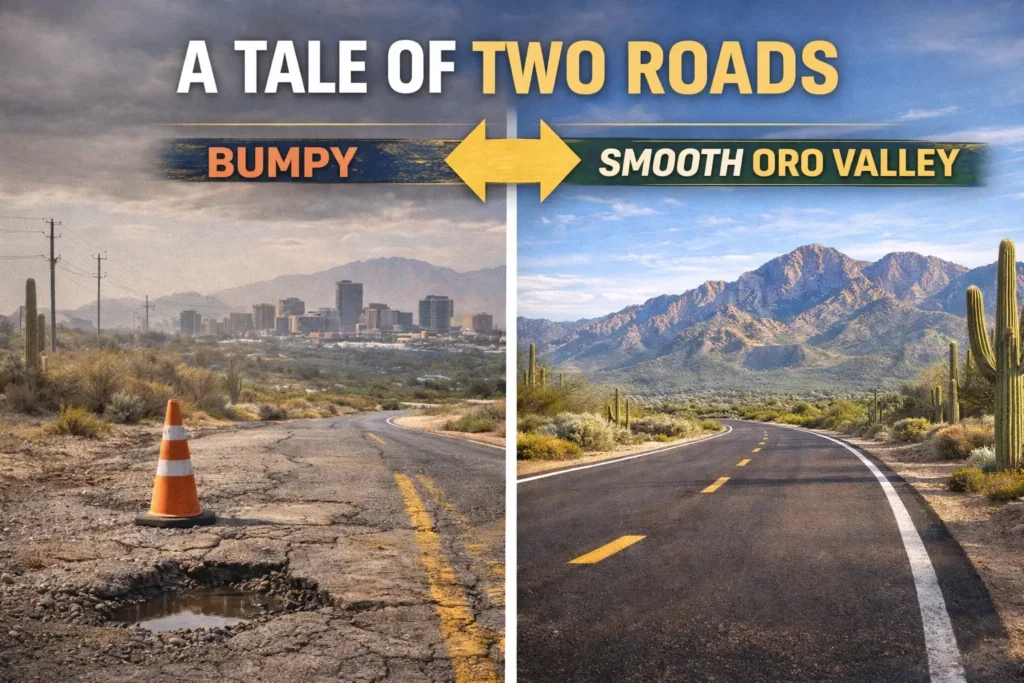
Try a simple experiment. Start your car in Oro Valley. Drive around for 20 minutes. Then drive into Tucson and do the same.
In Oro Valley, your coffee stays in the cup. Your phone doesn’t launch itself off the dashboard. You don’t accidentally learn new words you weren’t planning to say in front of your kids.
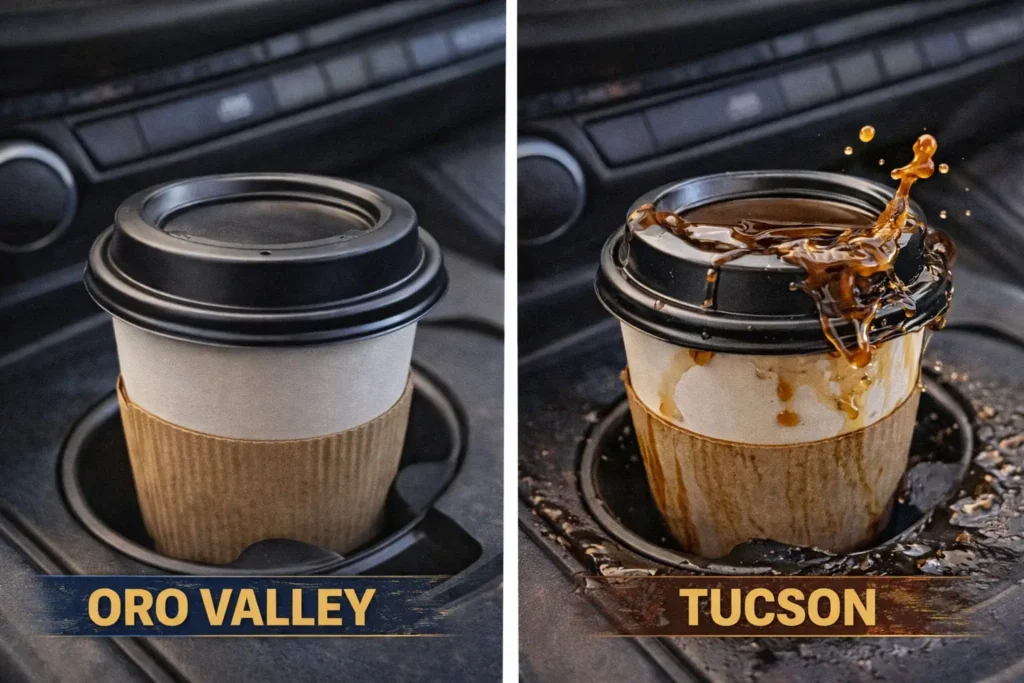
In Tucson, the drive can feel like a live-action arcade game called Dodge This, Buddy. It’s less “commuting” and more “field testing.” By the time you reach your destination, you’re not sure if you need lunch or an alignment.
Yes, Tucson is a larger city with more lane miles, older infrastructure, and more wear and tear. That’s real. But the difference people feel every day is also about consistency: planned upkeep, clear priorities, and a local government culture that sweats the practical details.
Oro Valley’s “Secret Strategy” Is Boring (And That’s Why It Works)
Oro Valley’s approach doesn’t feel like a grand plan. It’s more like a steady standard. Not dramatic. Not constant crisis mode. Not endless task forces studying why the last task force didn’t work.
It’s the basics, executed well:
- Streets that don’t feel like they’re actively trying to harm your vehicle
- Neighborhoods that feel livable and cared for
- Errands that don’t take 45 minutes and a prayer
- Parks, trails, and public spaces that signal “we planned ahead”
- A general vibe of “we’d like you to enjoy your day”
When the everyday stuff works, you don’t have to think about it. You get time back. Energy back. Sanity back.
When it doesn’t, you spend your life compensating: longer drives, more repairs, more stress, and less trust that anything will improve.
That’s why road quality matters. Roads aren’t just pavement. They are a daily feedback loop that tells residents and visitors whether a city is paying attention.
Why Businesses Like Oro Valley: Smooth Operations Beat Big Promises
Businesses don’t relocate because a town has a pretty view—though Oro Valley absolutely does. They relocate because employees want to live there, customers like arriving there, and operations are predictable.
If you’re running a business, you want:
- Predictable commutes and delivery routes
- Customers who aren’t exhausted by the time they arrive
- A community where families are settling in and staying
- Schools people trust
- A reputation that helps with hiring instead of hurting it
When a city’s core struggles with safety concerns, blight, slow development, and constant friction, people naturally look for alternatives. Across the region, that often means communities like Oro Valley—places where quality of life feels more stable and the basics are handled.
Families Follow Confidence, and Schools Follow Families
Let’s talk about the most honest vote anyone casts: where they raise their kids.
Families don’t move because of one factor. It’s a stack of small upgrades that together feel like a new chapter:
- Schools people feel confident in
- Neighborhoods where kids can ride bikes without it being a high-stakes event
- Clean, usable parks and recreation
- Community programs that show up consistently
- Roads that don’t punish your car on the way to soccer practice
It’s not glamorous, but it’s real. When those boxes get checked, you don’t need a marketing campaign. You get momentum. People tell other people: “Come up here. It’s just easier.”
Tucson’s Best Feature Might Be Its Exit Signs (Kidding… Mostly)
Okay, that’s a little mean. But it’s also the kind of joke Tucson residents make about Tucson, because you have to laugh or you’ll cry into your mechanic’s invoice.
And to be fair, Tucson has incredible culture, history, food, arts, and neighborhoods with genuine charm. It’s a city with a lot to love.
But love doesn’t change the lived experience many drivers report: for years, Tucson has struggled to translate big potential into consistently maintained basics. When a city stretches outward while the core weakens, you end up maintaining more roads, carrying heavier traffic loads, and falling behind. The result shows up in the same place every time: the street in front of you.
Oro Valley’s Pitch: A Better Day-to-Day
Oro Valley doesn’t have to write dramatic speeches to explain why it works. It just has to keep doing the fundamentals well.
We’re not trying to be everything for everyone. We’re trying to be a place where:
- You can live, work, learn, and relax without constant friction
- Infrastructure feels maintained instead of neglected
- Growth feels planned instead of chaotic
- The town feels like it respects your time
And yes, the roads are part of that. They’re not the whole story, but they’re the story you experience every day.
If Tucson’s potholes are a metaphor for deeper issues, then Oro Valley’s smoother streets are a metaphor too: steady standards, steady investment, steady results.
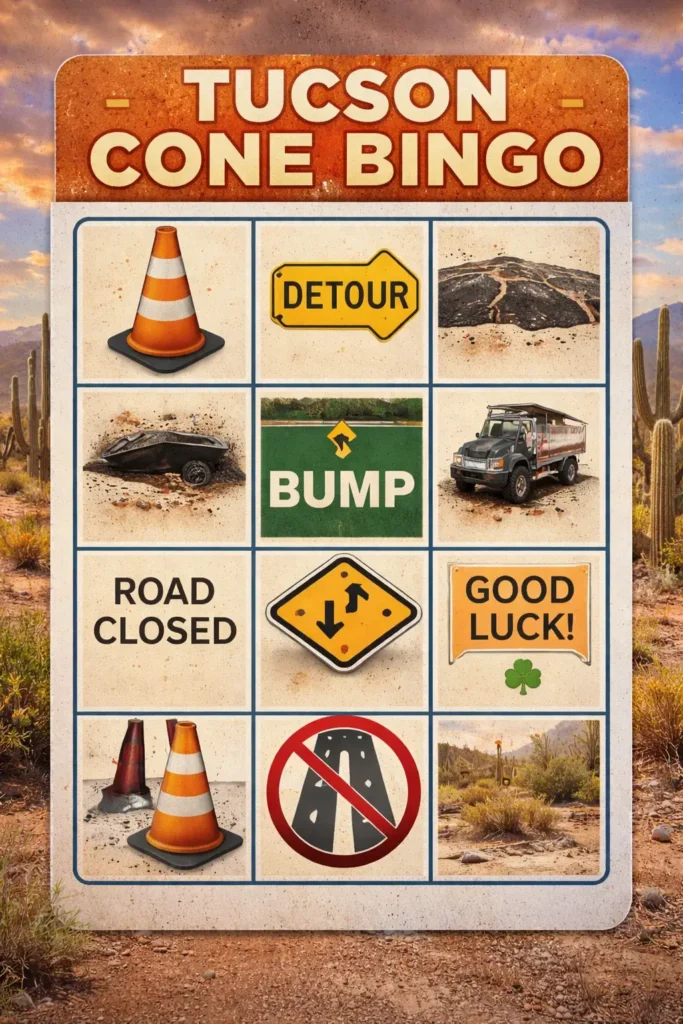
A Friendly Suggestion for Tucson
Tucson doesn’t need to become Oro Valley. It needs to become Tucson, but more functional—with a stronger core, smarter development, and a public realm people feel proud of again.
Because when Tucson thrives, the whole region benefits.
But until then, Oro Valley will keep doing what it does best: quietly becoming the place people choose when they’re ready for life to feel a little more… drivable.
And if you’re reading this from Tucson while bouncing down a cratered lane and whispering sweet nothings to your shocks and struts, just know this: we’ve got smoother pavement waiting for you up here.
Welcome home.