
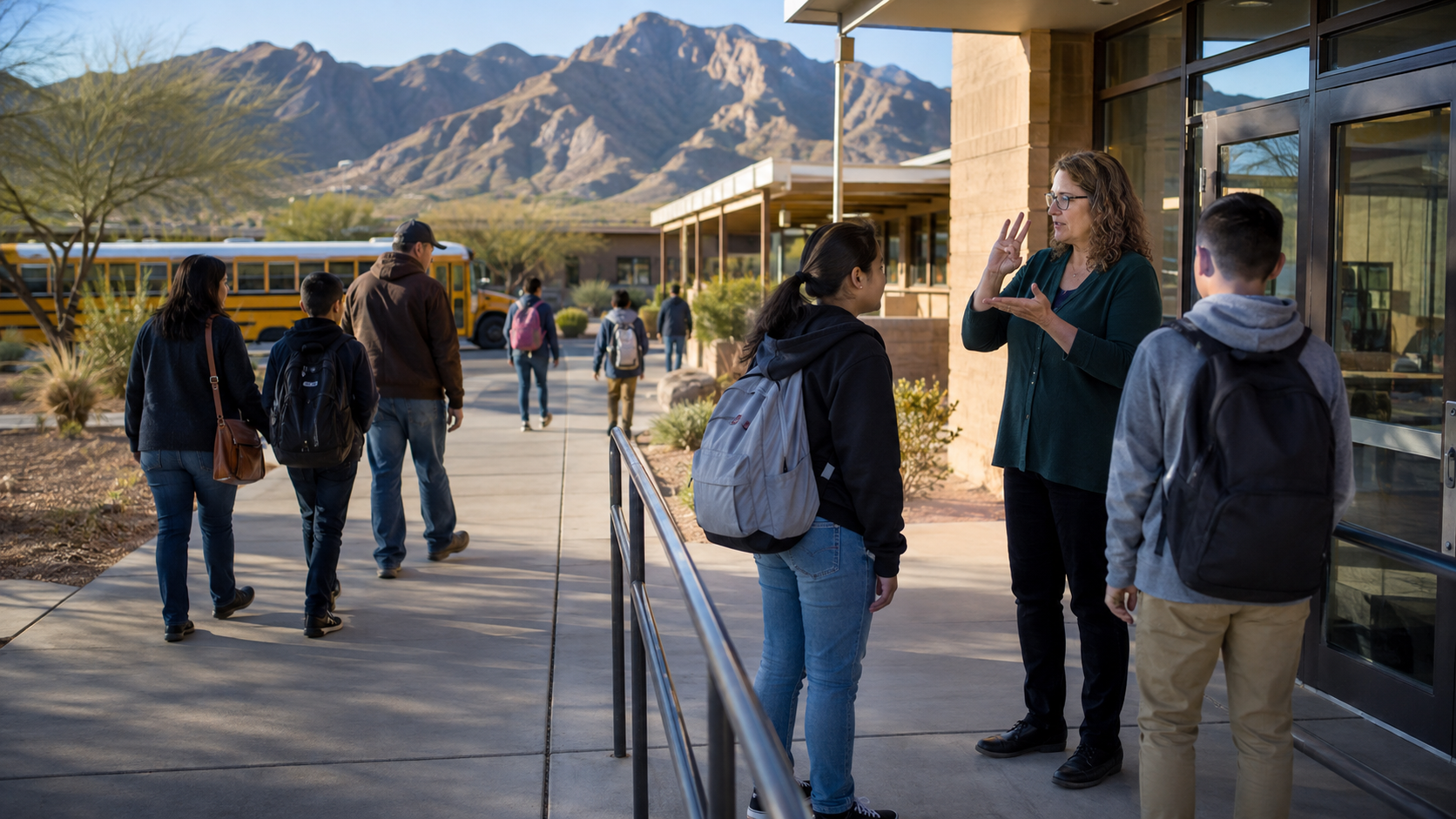
The Arizona State Schools for the Deaf and the Blind is beginning a new school year with its Tucson deaf and hard-of-hearing program relocated to the former Copper Creek Elementary campus in Oro Valley.
The move gives ASDB a functioning school site and keeps the Copper Creek property in educational use. It also arrives with unresolved questions about how the transition was planned, which students were included and whether families received the protections required under federal special-education law.
Both parts of that story matter.
What Moved to Oro Valley
ASDB approved a five-year lease with Amphitheater Public Schools to operate at the Copper Creek campus. The physical relocation began after the 2025-26 school year ended, with students scheduled to start the 2026-27 year in Oro Valley.
The new site primarily serves students who are deaf or hard of hearing. ASDB has said the move was driven by a projected multimillion-dollar deficit, declining enrollment, increasingly expensive facilities and the need to operate with fewer resources.
From Oro Valley’s perspective, the move brings a statewide educational institution into town and places a closed school campus back into active use. That is a meaningful development, but it is not the entire story.
Who Did Not Move With the Program
Blind and visually impaired students were not offered the same campus placement. ASDB instead planned to serve many of those students through cooperative arrangements with local public-school districts.
That distinction triggered immediate objections from families and advocates. Some students had originally entered ASDB because their neighborhood districts were unable to provide the specialized instruction they required. Families questioned whether returning them to district settings under a new cooperative model would actually preserve the services, staff and peer community they had at ASDB.
The dispute was never simply about whether Copper Creek was a usable building. It was about whether the relocation process treated all affected students as individuals with enforceable educational rights.
A State Finding Raises the Stakes
In July, the Arizona Department of Education found that ASDB violated federal special-education law during the transition, according to reporting by the Arizona Daily Star and statements from the University of Arizona’s Education Advocacy Clinic.
The finding reportedly centered on the displacement of blind, visually impaired and residential-program students and the process used to change their placements and services.
That does not mean the Oro Valley campus itself should fail. It does mean the success of the students who arrived at Copper Creek cannot erase the obligations owed to the students who did not.
ASDB should make the department’s findings, corrective steps and current service plans easy for families and the public to understand. General reassurance is not enough when individualized education programs, mobility instruction, Braille services, transportation and access to specialized staff are involved.
A New School Emerged From the Disruption
The transition also led former ASDB educators and advocates to establish the nonprofit Tucson School for the Blind in downtown Tucson.
The school opened August 3 with approximately 14 registered students, nearly all of them former ASDB learners, according to AZ Luminaria. Its staff includes teachers and specialists with experience in orientation and mobility, speech and occupational therapy, Braille and instruction for visually impaired students.
Its creation demonstrates both community resolve and the depth of the gap families believed they were facing. Parents should not have needed an emergency nonprofit response to feel confident that specialized instruction would continue, but the new school gives some families another option.
What Oro Valley Should Expect From Its New Neighbor
Oro Valley should welcome students and staff arriving at Copper Creek. They deserve a campus where they can learn, build relationships and take part in the community without being treated as symbols in someone else’s political argument.
Welcoming the school does not require the town or its residents to ignore legitimate questions about ASDB’s administration.
The institution should publish clear answers about:
- Which programs and grade levels are operating at Copper Creek
- How many students and staff made the transition
- What specialized services are available on the Oro Valley campus
- How services for blind and visually impaired students are being delivered elsewhere
- What corrective action follows the state’s legal finding
- How families can raise concerns and receive timely answers
Those are not hostile questions. They are the basic information families need to judge whether a major transition is working.
A Fair Measure of Success
The Copper Creek campus should not be judged solely by whether the doors opened on time. It should be judged by whether students receive consistent services, whether qualified staff remain in place and whether families are treated as participants rather than obstacles.
ASDB’s move to Oro Valley may still produce a stable and successful school community. The campus has an opportunity to become a valued local institution.
But responsible leadership requires more than finding a less expensive building. It requires protecting students through the transition, acknowledging errors plainly and correcting them quickly.
Oro Valley can be proud to welcome the students at Copper Creek while still insisting that every student affected by the move receives the education and legal protections they were promised.